ENERCO SOLUTIONS · INDUSTRIAL HEATING, COOLING & VENTILATION

Home / Knowledge and advice
Targeted heating for industry and businesses
Why infrared heating for your business?
Infrared can be useful where specific workstations need heat. The right solution starts with your space, occupancy and desired comfort, rather than a standard heater.
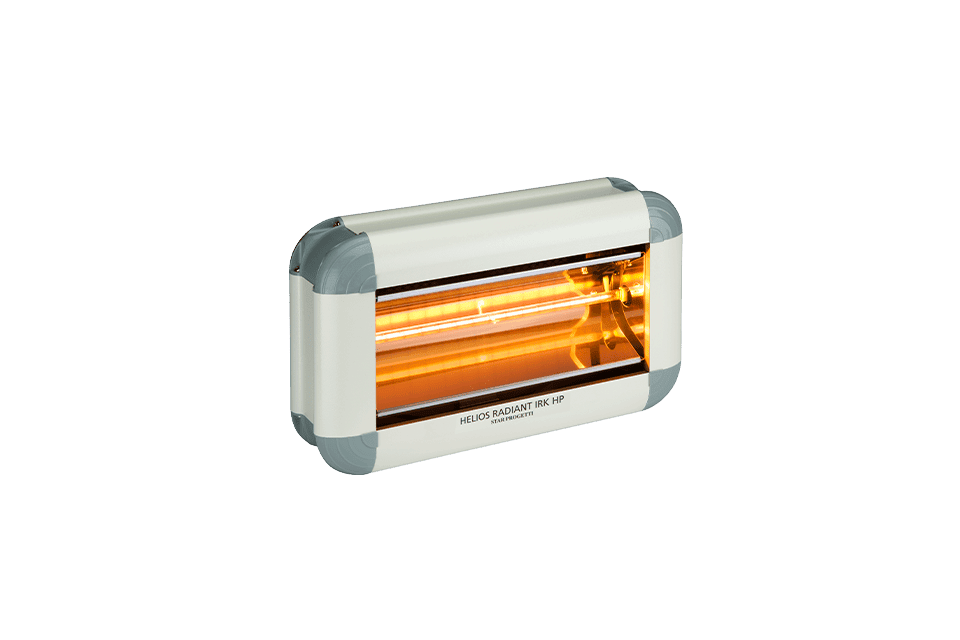
Manufacturer photo: Helios Radiant, Star Progetti.
The principle
Heat where you work
An infrared heater transfers heat by radiation. People and surfaces receiving it absorb the heat. This can heat an occupied work area without bringing the entire building to temperature solely through warm air.
Positioning matters: shelving, machinery and obstacles can block the radiant path. Distance, height and distribution affect comfort. The building still loses heat, so insulation, draughts and openings remain relevant.
Matched to your business
When is infrared worth assessing?
We start with where people work and when heat is needed.
Fixed work areas
Workbenches, packing areas and production stations may have different heat needs from the rest of the building. A proposal considers staff positions and movement.
Large, high spaces
In warehouses and halls, we assess local heating against occupancy. For a temperature target across the whole hall, we also compare other solutions.
Changing use
For temporary or changing work areas, mobile heaters may be useful. Supply, positioning and controls must suit the model and workplace.
The suitable heater
Short-wave, long-wave or mobile heating?
Infrared includes several heater types. Choose based on the application and technical data of the specific version.
Short-wave: an option for targeted work areas. Assess radiant distribution, mounting height, light output and controls.
Long-wave: radiant panels and industrial heatstrips. Output, positioning and use determine the suitable version.
Mobile heaters: where a fixed position is less practical. Follow model instructions for moving, connecting and clearances.
Consumption and controls
What determines running costs?
The word infrared does not guarantee low consumption. Output, actual operating time, controls and electricity tariff determine costs.
A useful starting point: power in kW × operating hours = consumption in kWh. A 3 kW heater running continuously at full output for two hours uses 6 kWh. With a thermostat or power control, consumption depends on actual operation.
To compare your existing installation, we use the same work areas, hours and comfort target. Provide existing heating, hours and consumption data. We do not promise a fixed saving percentage.
From explanation to a proposal
What information do we need?
These details help us discuss a suitable solution.
- Length, width and height.
- Sketch or photos of workstations, shelving and machinery.
- Occupancy, hours and desired comfort.
- Insulation, draughts, doors and existing heating.
- Electrical supply and process requirements.
Mounting, minimum clearances, dust or moisture protection and maintenance follow model documentation. Special environments require separate assessment.
Frequently asked questions
What else would you like to know?
Can infrared heat an entire industrial hall?
This depends on demand, space and layout. Local heating and whole-hall heating need different designs. Tell us the expected result so we can compare techniques.
Does infrared work with open doors?
Targeted radiation can suit work areas, but open doors and draughts still affect comfort and demand. We assess workstation locations and building conditions.
Is every heater suitable for damp or dusty spaces?
No. Protection ratings and conditions vary by version. Select according to the environment and manufacturer instructions.
Can I try one heater?
Discuss the area and planned positioning first. A trial is useful only when the heater, mounting and conditions match the final plan.
Further information: Star Progetti infrared heaters and radiant heating principles.
Applications