ENERCO SOLUTIONS · INDUSTRIAL HEATING, COOLING & VENTILATION

Industrial halls & production
Industrial hall heating, work area by work area
From assembly lines to maintenance areas. Choose heating that suits the height, layout and daily activities in your hall.
Photo: industrial hall from the existing website image collection.
Start with heating demand
What needs to stay at temperature in your hall?
A hall may combine production, storage, assembly and logistics. Staff comfort may be the main priority, while storage or production processes may require specific temperatures. We identify these needs separately.
Workstation comfort
For fixed assembly and production areas, we assess staff positions, occupancy duration and the required heat distribution.
Temperature throughout the hall
If the entire space needs a minimum air temperature, this requirement belongs in the design. Targeted radiant warmth and whole-space heating address different needs.
Storage & frost protection
Specify which goods, pipes or installations need protection. The proposal must address their specific temperature requirements.
Industrial electric heating
Targeted warmth in large, high halls
With infrared heating, people and surfaces within the heater’s radiant coverage receive warmth. This can allow targeted heating of work areas in a large hall.
Height, distance, placement and coverage must be considered together. Machines, racking and changing goods flows can affect heat distribution.
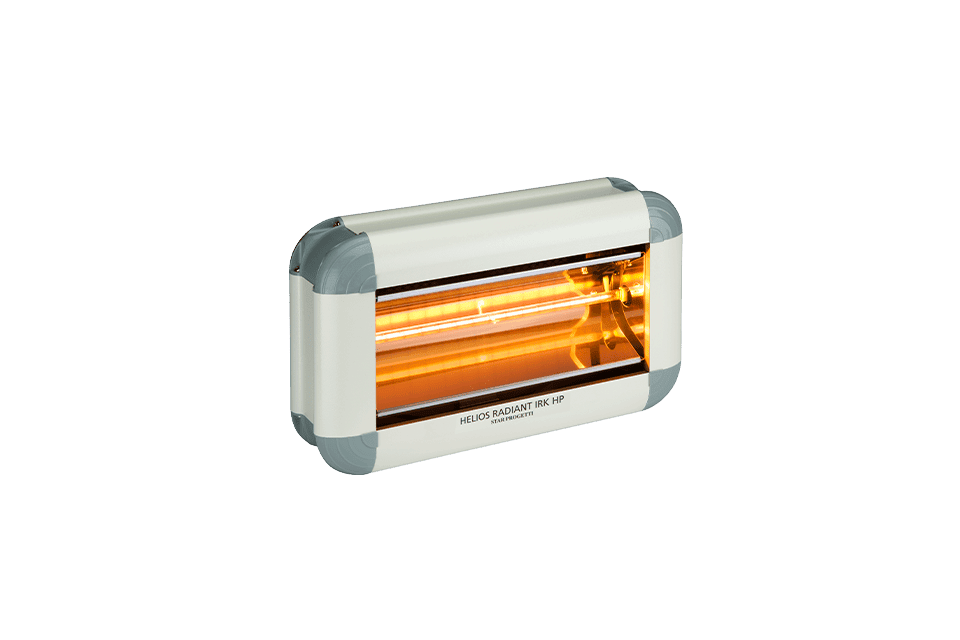
Electric short-wave heaters
Helios Radiant HP1 is an example from the Star Progetti range. A product photo does not determine which model suits your hall: we assess your situation.
Product photo: Star Progetti.
Your building and its use
The right technology for your hall
One hall can have different heating needs. We therefore compare technologies based on your actual use.
Electric short-wave heating
An option for targeted, quickly perceptible warmth in work areas. Placement must suit where people work.
Electric long-wave heating
We consider long-wave panels against available mounting height, operating hours and desired heat distribution.
Electric air heating
If air temperature is the priority, we assess air heating and warm-air distribution throughout the space.
Mobile infrared heaters can supplement heating for temporary tasks. A combination of technologies may also be relevant when production, storage and offices have different requirements.
From hall to heating plan
A proposal based on your production layout
Your floor plan, work areas and technical details allow us to make the proposal specific.
1. Building and layout
Dimensions, ceiling height, insulation, doors, installations and production equipment form the starting point. Include any planned changes.
2. Temperature and use
Which areas are used, during which shifts and with what temperature requirements? We distinguish workstation comfort from storage or process requirements.
3. Heaters and controls
We work towards a selection of heaters, mounting locations and controls. Available electrical capacity is part of the assessment.
Moving from an existing system to electric heating
For replacement or expansion, we establish what the current system does and what you want to improve. Different heating needs require different changes. We assess heat demand, connection capacity and operating hours before selecting heaters.
Consumption follows from power and operating hours. Cost comparisons must therefore use the same conditions and temperature requirements. Any on-site electricity generation is assessed during heating hours.
Practical questions
Frequently asked questions about industrial hall heating
These details help us choose suitable technology and power.
Can I heat only the production area?
Targeted zone heating is an option if other areas do not need the same temperature. We also assess staff and machine positions.
Is infrared enough to keep the hall frost-free?
This cannot be assumed from workstation comfort alone. Specify separately what needs protection and the minimum temperatures required so these needs are included in the design.
How important is ceiling height?
Height affects the distance to radiant coverage and the choice of model and power. Permitted mounting heights and distances follow the chosen model’s documentation.
What if doors are often open?
State how often and for how long doors are open and which workstations are nearby. Air movement, heat losses and workstation comfort can then be assessed.
Can controls vary by shift or area?
This depends on the chosen heaters and controls. We assess separate areas, working hours and compatible operation as part of the proposal.
Your project starts here
A heating plan for your industrial hall?
Send us dimensions, height and production layout. Specify which work areas and goods need to stay at temperature.
More applications
Heating for warehouses and workshops too
Explore warehouse heating and workshop heating. For a known model, visit the shop.